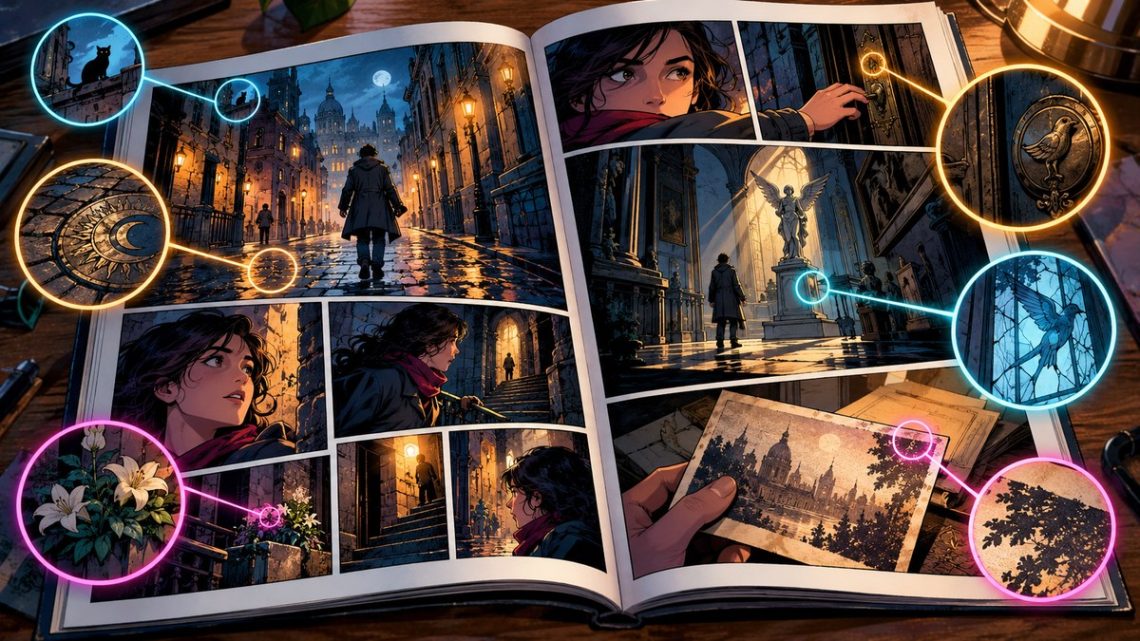
How to Read a Comic Like a Pro: A Panel-by-Panel Guide to Unlocking Hidden Details
You grab a fresh issue from your local shop, flip to page one, and scan the panels. The art looks great. But are you catching everything the artist and writer put in there? Most readers skim the surface. They follow the dialogue and enjoy the action, but they miss the subtle storytelling happening inside each frame. Learning how to read comic panels like a pro changes that. It turns every page into a richer experience. You start noticing the small details that make a story unforgettable.
Reading comic panels like a pro means training your eye to see more than just words and pictures. You learn to analyze composition, spot hidden symbols, and understand how panel transitions control pacing. This guide breaks down the process into clear steps so you can unlock the full story hiding in every issue you pick up.
What Makes a Comic Panel Work
A panel is a single frame of action. But it is also a container for information. Every choice the artist makes from the angle of the camera to the placement of a character’s hand carries meaning. When you know what to look for, you read the panel the way the creator intended.
Think about the last time you saw a wide shot of a city skyline in a Batman comic. That panel does more than show a location. It sets a mood. It tells you Gotham is vast, dangerous, and watching. A close up on a character’s eyes does the opposite. It pulls you into their emotion. The shift between these shots is a language. Learning that language is the core of how to read comic panels like a pro.
Panel composition follows the same rules as photography and film. The rule of thirds, leading lines, and negative space all apply. A character placed off center can feel isolated. A diagonal line across a panel creates tension. A panel with lots of empty space around a small figure makes them seem powerless. These are not accidents.
The Five Elements to Scan in Every Panel
Before you read a single word balloon, scan the panel for these five things. Doing this trains your brain to see the full picture.
- Facial expressions and body language: Look past the main character. Check the background figures too. Their reactions often tell a different story than the hero’s.
- Lighting and shadows: Hard shadows suggest danger or secrecy. Soft light implies safety or romance. A character half in shadow is hiding something.
- Background details: Posters, graffiti, newspapers, and objects on a desk. These are prime spots for hidden details and Easter eggs.
- Panel shape and size: A tall, narrow panel can imply height or falling. A wide panel slows time. Jagged panel borders suggest chaos or violence.
- Color palette: Warm colors often signal action or anger. Cool colors suggest sadness or calm. A sudden shift in color across a page signals a change in tone.
Once you build this scanning habit, you will start catching things on your first read that used to take three passes to notice.
A Step by Step Process for Reading Panels
Now let’s put that scanning into a repeatable process. Follow these steps for each page, especially on your first read of a new issue.
- Take in the whole page before reading anything. Let your eyes wander. Notice the layout. Which panel is the largest? That is usually the most important moment on the page. Which panel is the smallest? That is often a transitional beat or a close up meant to land hard.
- Scan for word balloons in reading order. In Western comics, you read left to right, top to bottom. But some layouts break this rule. Look for the zigzag pattern. If a word balloon is placed oddly, the artist may be forcing your eye to move faster or slower.
- Read the dialogue and captions. Pay attention to what the words say, but also what they do not say. A character who talks a lot in a small panel might be hiding nervousness. Silence in a large panel can be deafening.
- Go back and look at the art again. Now that you know what is happening, look for visual clues that support or contradict the text. A character says they are fine, but their clenched fists tell a different story.
- Check the gutters. The space between panels is where your imagination fills in the missing action. A good artist uses the gutter to make you work. A jump from a character swinging a punch to a villain on the ground lets you imagine the impact.
Panel Transitions and Pacing
Scott McCloud’s “Understanding Comics” broke down panel transitions into six types. You do not need to memorize all of them, but knowing the basic categories helps you see how a storyteller controls time.
| Transition Type | What It Does | Common Mistake |
|---|---|---|
| Moment to moment | Shows a single action in very small steps. Feels slow and deliberate. | Using this too much makes a page drag. |
| Action to action | Shows a single subject in a series of actions. This is the standard for fight scenes. | Skipping too many steps makes a fight confusing. |
| Subject to subject | Stays within a scene but changes subjects. Great for conversations. | Switching subjects too often without establishing the space can disorient the reader. |
| Scene to scene | Moves across time or space. Used for flashbacks or location changes. | Failing to signal the shift with a caption or visual cue. |
| Aspect to aspect | Shows different aspects of a place or mood. Common in slice of life or horror. | Overuse can feel aimless if there is no narrative thread. |
| Non sequitur | No logical connection between panels. Rare and usually symbolic. | Can frustrate readers if the intent is not clear. |
When you identify the transition type, you understand the pace. A page full of moment to moment transitions builds tension slowly. A page of scene to scene transitions covers a lot of ground but can feel choppy if not handled well.
“The gutter is the magic space where the reader becomes a collaborator. The artist provides the images, but the reader provides the motion between them.” Scott McCloud, Understanding Comics
Hidden Details and Easter Eggs
Comic creators love hiding things for attentive readers. These details reward the people who take the time to look. They also build world depth. A single panel in a crowded issue might contain a reference to a character’s first appearance, a nod to a classic cover, or a hint about a future plot twist.
Start with the backgrounds. Look for signs, license plates, book titles, and computer screens. In many modern comics, writers use these spaces to drop references to other stories in the same universe. If you are reading a Marvel book, check the headlines on newsstands in the background. They often tease events from other series.
Next, look at costume details. A torn sleeve, a missing button, or a scuff on a boot can tell you what happened off panel. These details show wear and tear. They make the story feel real.
If you want to get better at this, try reading a single issue three times. The first time, just enjoy the story. The second time, focus on the backgrounds. The third time, look for repeated symbols or motifs. A specific shape or color that appears in multiple panels is almost always intentional.
Common Mistakes When Reading Panels
Even experienced readers slip up. Here are the most common mistakes and how to avoid them.
- Reading the words first, every time. Words are important, but the art carries half the story. Train yourself to look at the picture before you read the text.
- Ignoring the small panels. Small panels are easy to skip, but they often contain critical reaction shots or transitional beats that set up the next big moment.
- Assuming the first thing you see is the most important. Your eye might land on the biggest character or the brightest color, but the real focus might be a small object in the corner. Train your eye to wander.
- Forgetting to check the credits. The letterer and colorist are part of the team. A change in lettering style can signal a different narrator or a shift in reality. A shift in color palette can indicate a flashback.
- Rushing through a double page spread. These are meant to be taken in as a single image. Do not break them into individual panels. Look at the whole spread first.
How to Practice Reading Panels Like a Pro
You do not need a classroom or a degree. You just need a few comics and a willingness to slow down.
Pick one issue from your pull list this week. Read it once normally. Then read it again using the five step process above. Take notes if you want. Write down what you noticed on the second read that you missed on the first. Do this for a month. You will start seeing patterns. You will catch details that used to slip past. You will understand why certain pages feel exciting and why others feel slow.
If you want to go deeper, look at the work of artists known for dense storytelling. Dave Gibbons in “Watchmen” packed every panel with background details that reward rereading. Fiona Staples in “Saga” uses color and composition masterfully. Mike Mignola in “Hellboy” uses shadow and negative space to create mood. Study their pages. Ask yourself why they made each choice.
Putting It All Together
Learning how to read comic panels like a pro is not about being the fastest reader. It is about being the most observant one. Every panel is a gift from the creative team. They made choices about what to show, what to hide, and how to frame it. Your job is to unwrap that gift with care.
The next time you sit down with a new issue, take a breath before you start. Look at the first page the way you would look at a photograph you want to remember. Let your eyes move slowly. Notice the shapes, the colors, the empty spaces. Then read the words. Then look again. You will be surprised at how much more story you find.
And once you master this skill, you will never read a comic the same way again. That is the point. That is the joy.
Start Your Deeper Reading Journey Today
Grab a recent issue from your collection or pick up something new. Use the process we covered here. Scan the five elements. Follow the five steps. Check the transitions. Look for hidden details. It will feel slow at first. That is fine. Speed comes with practice.
If you are looking for suggestions on what to read next, check out our list of top 10 must-read comics for new fans. For those interested in the business side of things, our article on how collectors are shaping the future of comic book markets offers a great companion read. And if you want to see how the medium is evolving, take a look at why independent comics are dominating the industry in 2026.
Keep reading. Keep looking. The details are waiting for you.