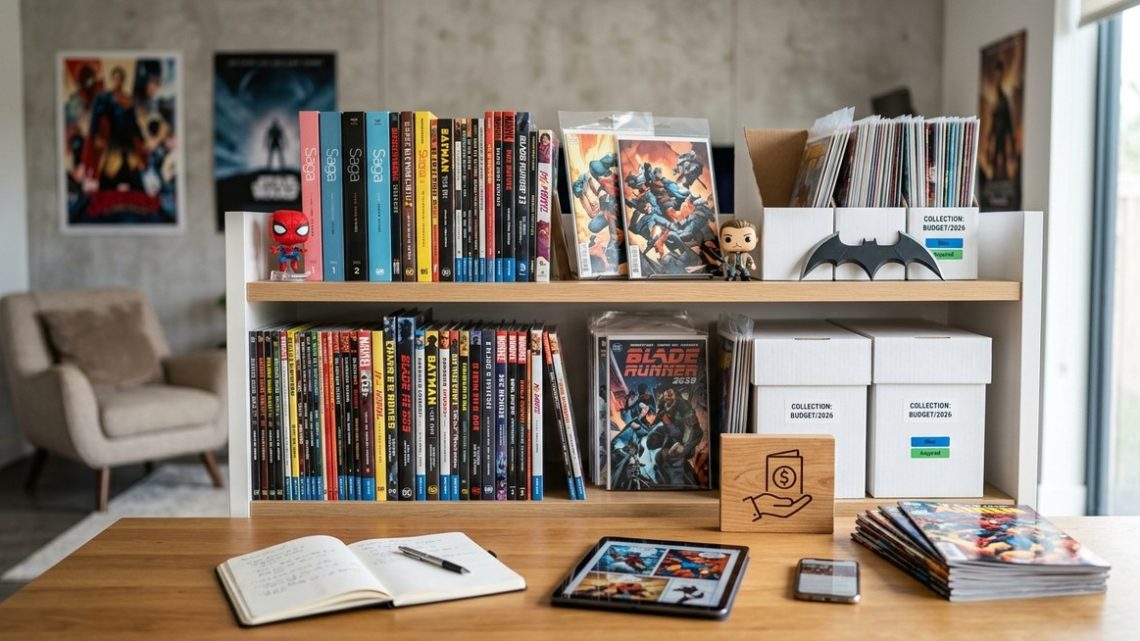
How to Build a Comic Collection on a Budget in 2026
Comic collecting in 2026 can feel like a rich person’s hobby. You see $10,000 copies of Amazing Fantasy #15 or a Batman #1 and think, “I’ll never have a real collection.” But that’s not true. Thousands of great comics are available for a few dollars or less. With the right strategy, you can build a meaningful collection without blowing your budget. Whether you’re starting from zero or looking to expand, this guide shows you exactly how to build a comic collection on a budget in 2026.
Building a comic collection on a budget in 2026 is all about smart hunting, knowing where to look, and focusing on what you love. Dollar bins, trade paperbacks, and digital sales give you great stories without the premium price. Avoid hype-driven buys, stick to a monthly limit, and trade with other fans. Your collection can grow fast for under $50 a month.
Why 2026 Is a Great Year to Start Collecting
The comic market has shifted. Speculators are more cautious after the post-pandemic boom. Many key issues from the 2010s have dropped in price. New reader-friendly editions and omnibuses are cheaper than ever. Plus, independent publishers are putting out incredible work that flies under the radar. If you’re looking to build a comic collection on a budget, this is a golden window.
Set Your Budget and Your Goal
Before you buy anything, decide two things: how much you can spend each month and what kind of collector you want to be. Here’s a simple way to think about it:
- Reader collector – You want to enjoy the stories. Trade paperbacks and collected editions are your friends.
- Key issue hunter – You want first appearances and iconic covers. You’ll need patience and a sharp eye for deals.
- Theme collector – You focus on one character, creator, or series. This narrows your hunt and saves money.
Once you know your style, set a monthly budget. $30 to $50 is plenty for most new collectors. Stick to it like a subscription.
Where to Find Affordable Comics in 2026
1. Dollar Bins at Local Comic Shops
Most shops still have bins of back issues for $1 or $2 each. You won’t find Action Comics #1 there, but you can grab runs of modern series like Saga, The Walking Dead, or Ms. Marvel. Ask the owner when they restock. Some stores even offer “fill a bag” deals on slow days.
2. Online Marketplaces with Filtered Searches
eBay and Mercari are full of listings. Use filters to sort by lowest price first. Look for bundles: “50 comics for $20” or “complete arc set.” These save on shipping and often include hidden gems. Check seller ratings and read descriptions for condition notes. For more tips on spotting value, read our guide on how to spot valuable first issues in 2026.
3. Library Sales and Used Bookstores
Public libraries sometimes sell donated comics for pocket change. Friends of the Library book sales are goldmines for graphic novels. Used bookstores like Half Price Books often have a comic section where prices are fixed low. You can find trades from Image, Boom!, and DC for half cover price.
4. Digital First, Print Later
If you only care about reading, digital is the cheapest route. ComiXology and Marvel Unlimited have monthly subscriptions for $10 or less. Read a run digitally, then buy only your favorite issues in print. This way, you build a small, meaningful physical collection. For more on digital options, check out the rise of digital comics in 2026.
5. Local Comic Conventions (Not the Big Ones)
Smaller conventions and comic expos often have dealers with dollar boxes. Big shows like San Diego Comic-Con are expensive, but a regional con in a hotel ballroom can yield great deals. Plus, you can trade with other collectors on the show floor. It’s one of the most social ways to build a collection.
What to Buy: Smart Choices for a Budget Collection
Not every comic is worth buying, even at a low price. Here’s a table to help you decide what to add to your cart and what to skip.
| Type of Comic | Why It’s Good for Budget | Watch Out For |
|---|---|---|
| Trade paperback collections | Contains a full story arc; often under $20; easy to store | Can be bulky; not ideal if you want individual key issues |
| Modern back issues (2010s) | Often in dollar bins; many key first appearances still cheap (like Ms. Marvel #1 or Squirrel Girl #1) | Condition can vary; avoid high print run variants that won’t hold value |
| Indie and small-press titles | Low cover prices; growing fanbase; potential future value | Less mainstream; harder to sell later if you want to trade |
| Recent number one issues | First issues of new series are often $3-4; can become keys if series is popular | Many #1s drop to $1 after a year; only buy if you like the story |
| “Reader copies” of older keys | A beat-up copy of a classic key (like X-Men #101) can be 80% cheaper than a high-grade slab | Heavily damaged books might not be satisfying to own; set a condition floor for yourself |
A good rule: buy comics that you actually want to read. If you don’t like the story, don’t buy it. That keeps your collection personal and prevents impulse purchases.
Three Mistakes That Drain Your Budget
Mistake #1: Chasing Hype
When a movie announcement drops, prices for that character’s first appearance spike. By the time you hear about it, the price is already inflated. If you want to speculate, do it ahead of time. A better approach is to collect what you love and let value happen naturally.
Mistake #2: Buying Slabs Before You Know Grading
Graded comics can cost three to ten times the raw price. Unless you’re a serious investor, buying raw books gives you more for your money. You can learn to grade at home using free online guides. Save the slab money for more books.
Mistake #3: Ignoring Condition and Storage
A comic with a torn cover or water damage is almost impossible to resell. Always check for moisture, rips, and missing pages. Store your books in acid-free bags with boards. Keep them away from sunlight and heat. Proper storage costs pennies but protects your investment. For more on preservation, see top tips for building a stunning collectible inventory.
Expert advice: “Never pay more than $5 for a modern comic unless it’s a confirmed first appearance or you absolutely love the cover. I’ve seen too many collectors spend $50 on a variant that’s worth $5 a year later.” — long-time collector at a local shop.
How to Use Trades and Swaps to Grow Your Collection
You don’t always have to spend cash. Trade with friends, join local comic clubs, or use online swapping groups like the r/comicswap subreddit. You can trade a book you’ve read for one you haven’t. This keeps your collection fresh without spending money. It’s also a great way to meet fellow fans and learn about series you might have missed.
Another idea: start a “reading circle” with three or four friends. Each person buys a different trade paperback for the month, then you rotate. You all read four books for the price of one.
Future-Proofing Your Collection in 2026
The market changes fast. Here are a few trends to watch that can help you build a collection that stays relevant:
- Independent comics are growing faster than ever. Publishers like Image, Aftershock, and Dark Horse produce talent that later moves to Marvel and DC. Buying early issues of indie breakouts can pay off. Read about why independent comics are dominating the industry in 2026.
- Vintage is coming back. Older series from the 1970s and 80s are seeing renewed interest. Silver Age books may be pricey, but Copper Age (1980s) and Bronze Age (1970s) books are still affordable. Discover why in why vintage comic collecting is making a comeback in 2026.
- Collector communities are driving value. It’s not just about speculation anymore; it’s about what fans actually love. Series with strong fanbases (like Saga or Something is Killing the Children) hold their value. For market trends, see how collectors are shaping the future of comic book markets.
Build Your Collection, Your Way
Here’s a simple process to follow each month:
- Set your monthly budget (say $40) and decide if you want new issues, back issues, or trades.
- Scan local sources: visit your shop’s dollar bin, check eBay for “comic bundle under $20”, and look at library sales.
- Buy only books that excite you or fill a gap in a series you love.
- Read everything. A comic you’ve read has more value to you than one sitting in a box.
- Trade or sell your duds once a quarter to recoup cash.
If you follow this cycle, your collection will grow in direction, not just mass.
Your Collection, Your Story
A collection isn’t measured by how much you spent or how many keys you own. It’s measured by the stories you love and the memories you attach to each book. Every comic you bought for a dollar at a flea market has a backstory. Every run you pieced together from bin hunting feels like a victory. In 2026, the smartest collectors aren’t the ones with the most money. They’re the ones who know where to look and what to love. Start small, stay consistent, and enjoy the hunt. Your collection will build itself.