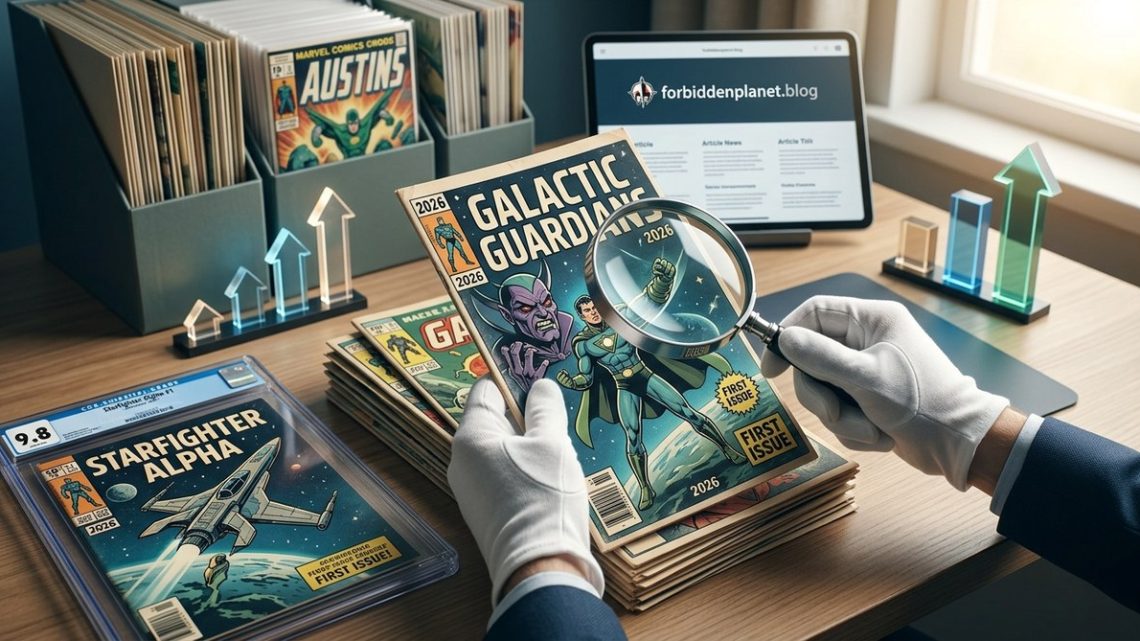
How to Spot Valuable First Issues in 2026
“`markdown
Walking into a comic shop in 2026 feels different than it did five years ago. The bins are deeper, the variants are wilder, and the buyers are smarter. First issues still carry that special weight, but not every #1 is worth your cash. The market has shifted, and collectors who know what to look for are finding real value in places others overlook. Whether you are hunting for the next big debut or a sleeper hit from last decade, the rules have changed. Understanding those rules is the difference between building a collection that grows and one that just takes up space.
First issues with high value in 2026 share key traits: a major character debut, low print runs, or a cultural turning point in comics. Modern variants from top indie publishers are gaining ground, while key Marvel and DC issues from the 1980s and 1990s remain steady investments. Condition matters more than ever, and knowing where to look and what to avoid can save new collectors money and build a smarter collection for the years ahead.
What Makes a First Issue Valuable in 2026
Value in comic books has never been random. There is always a reason a first issue climbs in price. In 2026, those reasons have become more specific. The days of speculating on every new #1 from a major publisher are mostly over. Too many variants, too many printings, and too much hype have diluted that strategy. Instead, collectors are looking for three key things.
First, character debuts still rule the market. A first issue that introduces a character who later appears in a movie, a streaming series, or a video game will always have a ceiling above the rest. The difference now is that collectors are looking earlier. They are not waiting for the announcement. They are reading the tea leaves on social media, following creator moves, and watching which indie books get optioned.
Second, print runs matter more than cover price. A low print run on a first issue from a smaller publisher can be worth more than a high print run from Marvel or DC. In 2026, publishers like Image, Boom, and Dark Horse are printing smaller numbers for their debut issues. That scarcity creates value fast, especially if the book catches on.
Third, cultural timing is everything. A first issue that captures the mood of the moment, whether through its story, its creator, or its themes, can spike in value before the second issue even drops. Think of books that deal with artificial intelligence, climate change, or social shifts. Readers in 2026 are connecting with those stories, and the market follows.
If you are new to collecting, you might want to check out our list of top 10 must-read comics for new fans to build a solid foundation before you start hunting for first issues.
A Simple Process to Spot Winners
You do not need to be a professional grader or a market analyst to find valuable first issues. You just need a system. Follow these steps every time you pick up a potential investment.
-
Check the print run data. Look up the issue on sites like Comichron or Key Collector. If the print run is under 20,000 copies, you have a candidate. Under 10,000 is even better. Modern first issues from Image and Boom often fall into this range.
-
Verify the creator pedigree. Who wrote it? Who drew it? Is this their first major work, or are they an established name with a track record of hits? Books by creators like Jeff Lemire, Kelly Thompson, James Tynion IV, or recent breakout artists tend to hold value better. A debut issue from a hot new creator can be a goldmine if the series lands.
-
Look for variant ratios that matter. A 1:25 or 1:50 variant of a first issue can be worth more than the main cover, but only if the base book has demand. Do not buy a rare variant of a book nobody cares about. The variant amplifies value, it does not create it.
-
Check for upcoming media adaptations. A first issue of a series that has been optioned for film or TV is a strong bet. In 2026, announcements come out months or years before production starts. If you spot a book that has been picked up by a studio, grab the first issue before the general public catches on.
-
Grade the condition yourself before you buy. Even a valuable first issue loses most of its worth if it is beat up. Learn to spot spine creases, color breaks, and corner dings. A 9.8 copy of a modern first issue can sell for ten times what a 9.2 copy fetches.
For a deeper look at how collectors are driving these trends, read our piece on how collectors are shaping the future of comic book markets. It will give you context on why certain books rise and others fall.
What to Scan For on the Shelves
When you are standing in front of a wall of first issues, your eyes need to know what to look for. Here is a checklist to run through in your head.
- First appearances of new characters. Even if the character is not famous yet, a first appearance in a first issue is the most desirable combination. Look for characters with distinctive designs or intriguing backstories that could translate to other media.
- Low numbering on the indicia. Some publishers restart their numbering, so a new #1 might actually be issue #51 in disguise. Check the indicia for original series numbering to avoid buying a renumbered first issue with no real history.
- Retailer incentive variants. These are often limited to specific stores or regions. If you find one in the wild, check its scarcity online. A rare retailer variant of a first issue can be a hidden gem.
- Blank cover variants. These are less common in 2026 than they were a few years ago, but a blank cover first issue is still a canvas for sketch covers. Artists often buy them for conventions, which drives up demand.
- First issues from imprints that are shutting down. When a publisher closes its doors, the first issues from that imprint become finite. Collectors scramble for them, and prices can jump.
If you see a first issue that hits two or more of these markers, it is worth a closer look. If it hits three, it is probably worth buying.
Smart Moves vs Costly Mistakes
Even experienced collectors make errors. The table below breaks down what works in 2026 and what does not.
| Smart Move | Costly Mistake |
|---|---|
| Buy first issues with verified low print runs | Assume every #1 from a major publisher is scarce |
| Focus on indie publishers with strong creator lineups | Chase every hot variant without checking the base demand |
| Grade books early if they look clean | Slab every modern first issue you find, even in poor condition |
| Track optioning news and studio announcements | Buy based on rumors or unconfirmed leaks |
| Build relationships with local shop owners for early access | Rely only on online retailers for first issue finds |
| Research the creative team’s past sales data | Ignore the writer and artist and buy based on cover art alone |
| Hold first issues for at least 12 to 18 months | Sell as soon as the price bumps a few dollars |
The table reflects what we have seen in the first half of 2026. Collectors who follow the left column are consistently outperforming those who follow the right. It is not about luck. It is about discipline.
Expert Advice from a Longtime Collector
“The biggest mistake I see new collectors make in 2026 is treating every first issue like a lottery ticket. They buy ten random #1s hoping one will hit instead of doing the work on one book that has real signals. I would rather own one first issue with a low print run, a strong creator, and a media option than fifty first issues that have none of those things. Quality over quantity has never been more true in this market than it is right now.”
- Marcus Webb, comic book retailer and collector for 22 years*
Marcus is right. The market in 2026 rewards research and patience. If you take the time to understand what makes a first issue valuable, you will make fewer mistakes and end up with a collection that actually appreciates.
For those who love the hunt, vintage first issues are also making a comeback. Check out our article on why vintage comic collecting is making a comeback in 2026 to see how older books are finding new life in the current market.
Where the Market Is Heading
First issues from 2025 and 2026 are already being watched closely by investors. A few trends are clear.
Indie publishers are taking a larger share of the value market. Image Comics alone has released several first issues in 2026 that have doubled in value within weeks of release. Boom Studios and Dark Horse are not far behind. The reason is simple: these publishers take risks on new characters and new creators. Marvel and DC still dominate sales volume, but the percentage gains are happening outside the big two.
Another trend is the rise of first issues tied to video game properties. With more game studios launching comic tie-ins, first issues of these adaptations are becoming collectible in their own right. A first issue that expands the lore of a popular game franchise can attract both comic collectors and gamers, creating a dual demand that pushes prices up.
We are also seeing collectors pay more attention to first issues from female and minority creators. The readership in 2026 is more diverse than ever, and the market is reflecting that. First issues that tell fresh stories from underrepresented voices are finding passionate audiences and strong aftermarket sales.
If you want to stay ahead of the curve, keep an eye on upcoming releases. Our guide to discover the most anticipated upcoming comics of the year will help you spot first issues before they hit the shelves.
Putting Your Knowledge to Work
The difference between a casual collector and a smart investor in 2026 comes down to one thing: preparation. You now have a clear process to follow. You know what to scan for on the shelves. You understand the difference between a smart move and a costly mistake. You have heard from an expert who has been doing this for decades.
Now it is time to apply that knowledge. The next time you walk into a comic shop or browse an online listing, run through the checklist. Check the print run. Look up the creator. See if the book has media heat. Grade the condition yourself. And do not be afraid to walk away if something does not add up.
There will always be another first issue. The valuable ones are the ones you choose with intention. Start with one book this week. Research it. Buy it. Hold it. Watch what happens. That is how smart collections are built, one issue at a time.
For more context on the broader shifts happening in pop culture and collecting, take a look at our article on uncover the latest trends shaping pop culture in 2026. It connects the dots between what is popular and what is profitable.