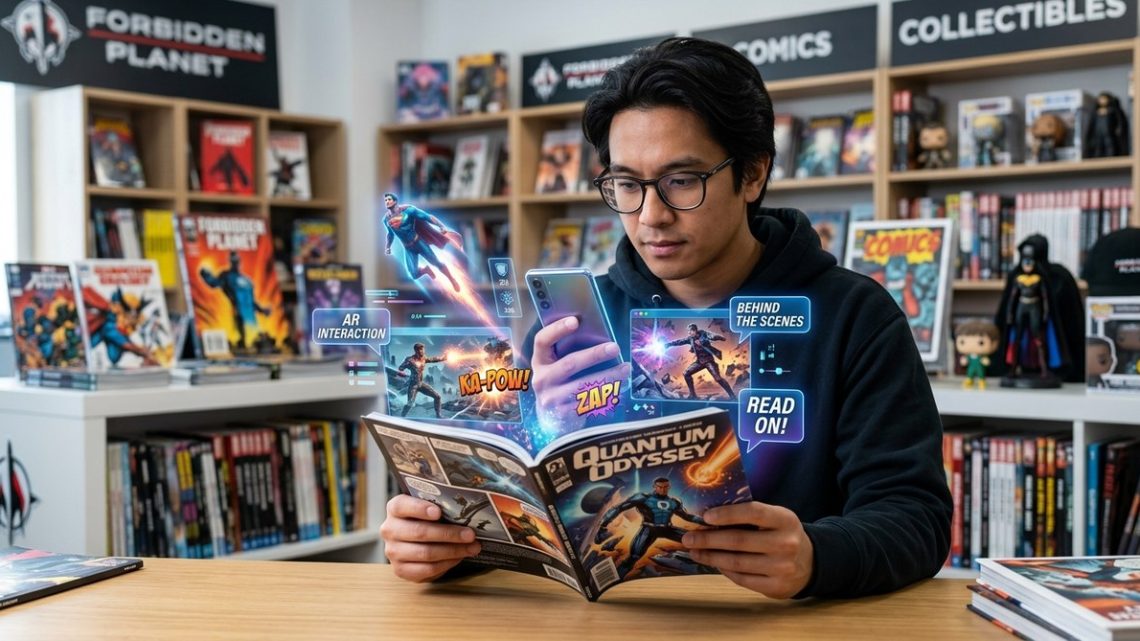
Why the Comic Book Industry Is Embracing Augmented Reality in 2026
The first time you hold a comic and see a character leap off the page through your phone screen, the experience feels nothing like a gimmick. It feels like the next logical step in visual storytelling. In 2026, that leap is happening at scale. Major publishers, independent creators, and tech startups are investing heavily in augmented reality features that layer animations, sound effects, and interactive elements onto printed and digital comics. This isn’t a futuristic concept anymore. It’s a real, growing movement that is changing how readers interact with their favorite stories.
Comic book augmented reality in 2026 moves beyond novelty. Publishers use AR to deepen narrative immersion through animated panels, 3D character models, and hidden Easter eggs activated by a smartphone camera. This technology boosts reader engagement, attracts new audiences, and creates fresh revenue streams for creators. The shift is real, practical, and already reshaping the industry.
What Comic Book Augmented Reality Actually Means in 2026
Augmented reality differs from virtual reality because it overlays digital content on the real world, not a fully simulated environment. For comics, that means pointing your phone or tablet at a page to unlock motion, sound, or extra story layers. It works with both printed issues and digital screens. In 2026 most smartphones come with advanced AR capabilities built into the camera app, making it easier than ever for readers to activate content without downloading a separate app.
The core idea remains the same as early experiments a few years ago. But the execution has matured. Current AR comics use markerless tracking, so you don’t need special symbols on the page. The device recognizes the artwork itself and places the augmentation exactly where it belongs. That shift alone removed the biggest user friction point.
Why 2026 Became the Year of AR Comics
A few forces converged to push comic book augmented reality into the mainstream. First, hardware costs dropped. A midrange phone from 2024 or later handles AR smoothly, and over 70 percent of readers in the United States now own a compatible device. Second, creator tools improved. Apps like Adobe Aero and Unity’s AR Foundation let artists and writers prototype interactive scenes without a dedicated programmer. Third, reader expectations changed. Younger audiences raised on TikTok filters and Instagram effects expect media that responds to their presence.
Industry data from early 2026 shows that single issues with AR features sell 15 to 25 percent more copies on average than standard editions. That statistic alone convinced hesitant publishers to test the waters. Major franchises — superhero universes, indie horror series, and even classic reprints — now include AR elements as a standard option, not a premium add-on.
How AR Works Inside a Comic: A Step-by-Step Process
Here is the typical process a reader follows to experience comic book augmented reality in 2026:
- Buy an AR-enabled issue. These are marked with a small badge on the cover. Digital storefronts like ComiXology and GlobalComix also offer AR versions that already have the data baked in.
- Open the companion app or use the native camera. Most major publishers now embed AR triggers inside their own apps. Some work directly through your phone’s photo scanner.
- Point your device at a full page or a specific panel. The app scans the artwork. If it recognizes the frame, it loads the overlay. This usually takes two to three seconds.
- Interact with the augmentation. You can tap to start a short animation, tilt your phone to reveal hidden objects, or watch a character deliver a line of dialogue. Some books include branching choices that alter the augmentation based on your tap.
- Share your experience. Many apps let you record a short clip of the AR moment and post it to social media. This creates word-of-mouth marketing for the series.
Publishers also use AR for bonus content like concept art, creator commentary, and easter egg puzzles that reward loyal readers. A few titles even hide clues across multiple issues, encouraging collectors to buy the full run.
Comparing Traditional and AR Comics: Key Differences
The table below breaks down how augmented reality changes the reading experience compared to a regular comic book.
| Aspect | Traditional Comic | AR-Enabled Comic |
|---|---|---|
| Story delivery | Static panels, text, and word balloons | Static panels augmented with motion, sound, and interactivity |
| Reader role | Passive observer | Active participant (can trigger content) |
| Shelf life | No updates after printing | Overlays can be updated or expanded via app updates |
| Production cost | Lower upfront | Higher initial cost for AR development, but growing tools reduce this gap |
| Collectibility | Traditional grading applies | Grading still exists, but AR content may be tied to an account |
| Accessibility | Relies solely on visual reading | Adds audio and optional descriptive overlays for visually impaired readers |
These differences highlight why creators see AR not as a replacement but as an enhancement. The printed book remains the core artifact. The augmented layer adds depth without destroying the original reading experience.
Key Benefits for Creators and Readers
For industry professionals, the shift toward AR brings several advantages.
- Higher reader retention. When a comic offers something extra after the page turn, subscribers stay engaged longer. Early data from direct market retailers shows that AR titles see fewer subscription cancellations.
- New revenue models. Apart from selling AR-enabled print issues, publishers can offer premium AR-only story branches or exclusive character skins for digital collections. This is similar to how video games monetize expansions.
- Better marketing hooks. A 15-second AR clip shared on TikTok or Instagram reaches potential readers who might never browse a comic shop. It bridges the gap between the page and the feed.
- Creative freedom. Artists can compose panels with hidden layers, letting the AR reveal details that the static image only hints at. This rewards repeat readings and close looking.
For readers, the benefit is simpler: comics become more immersive without losing the tactile feel of paper. You still get the weight of the issue, the smell of ink, the joy of turning a page. The AR sits on top, like a director’s commentary track on a favorite film.
Industry Expert Weighs In
“What excites me most about comic book augmented reality in 2026 isn’t the tech itself. It’s how creators are finding personal ways to use it. I’ve seen a one-person indie comic use AR to play a background score that changes with each issue. That’s art directing, not just gimmickry. The best AR comics treat the phone like a flashlight that reveals something already hidden in the page, not like a video game overlay.” — Jordan Reyes, comic creator and AR designer
This sentiment echoes across the community. The technology works best when it feels organic, not forced. A common mistake is cramming AR into every page. The most successful titles use it sparingly: a key reveal, a dramatic splash page, or a puzzle that rewards the observant reader.
Common Pitfalls and How to Avoid Them
As with any new medium, early adopters sometimes stumble. The table below outlines frequent mistakes and the correct approach.
| Mistake | Why It Hurts | Better Practice |
|---|---|---|
| Overloading pages with AR | Readers become distracted; the static art loses impact | Limit AR to 2-3 moments per issue; let the rest of the story breathe |
| Requiring a separate app | High friction; users abandon the experience | Use native camera AR or a publisher app that loads automatically |
| Poor lighting triggers | AR fails in dim reading environments | Add fallback content (text descriptions) or a button to manually activate |
| Forgetting offline readers | Digital AR needs an internet connection for some assets | Cache overlays locally so they work in airplane mode |
| Neglecting accessibility | Relying only on visual AR excludes blind or low-vision fans | Include audio descriptions and haptic feedback options |
Publishers that avoid these pitfalls see higher satisfaction scores and more repeat interactions. The AR experience should feel like a bonus, not a chore.
Getting Started with AR Comics in 2026
If you are a reader curious to try this, start with a title that has a strong reputation for AR integration. Most comic shops have a dedicated display now. You can also browse digital storefronts for AR-labeled issues. A good entry point is a standalone one-shot or a first issue of a series, so you can test the experience without committing to a long run.
For creators and small publishers, the barrier has never been lower. Free tools like ZapWorks and Lens Studio let you prototype AR in an afternoon. Many independent creators now collaborate with AR developers through platforms like Patreon or Kickstarter, where backers fund the extra production costs. The trend toward AR is not limited to big superhero books. It thrives in the indie scene because creators can experiment without corporate approval.
The Future of Comic Book Augmented Reality Past 2026
Looking ahead, the integration of AI with AR could personalize the reading experience. Imagine a comic that adjusts its overlays based on your past choices in the series. Or a horror title that uses the camera to integrate your own environment into the story. Those ideas are already in prototype stages at a few studios.
Another development is persistent AR content tied to a specific physical issue. If you buy a first printing and register it, you unlock exclusive AR scenes that stay in your account even if you sell the book. This adds a new layer to collecting. The physical book still holds value, and the digital layer becomes a separate asset. This could reshape how collectors think about first editions in the coming years.
For now, the focus remains on delivering stories that feel alive. The comic book industry learned a hard lesson from the digital revolution earlier this century: technology alone doesn’t sell. It must serve the story. In 2026, augmented reality finally does that.
Your Next Page Turn Could Be Different
Grab a recent issue with an AR badge. Sit in good light. Open the companion app and hold your phone over the first full page. Watch what happens. That mix of paper and pixel might remind you why you fell in love with comics in the first place — the sense that anything can happen between two covers. Now a little more happens right after you close them.