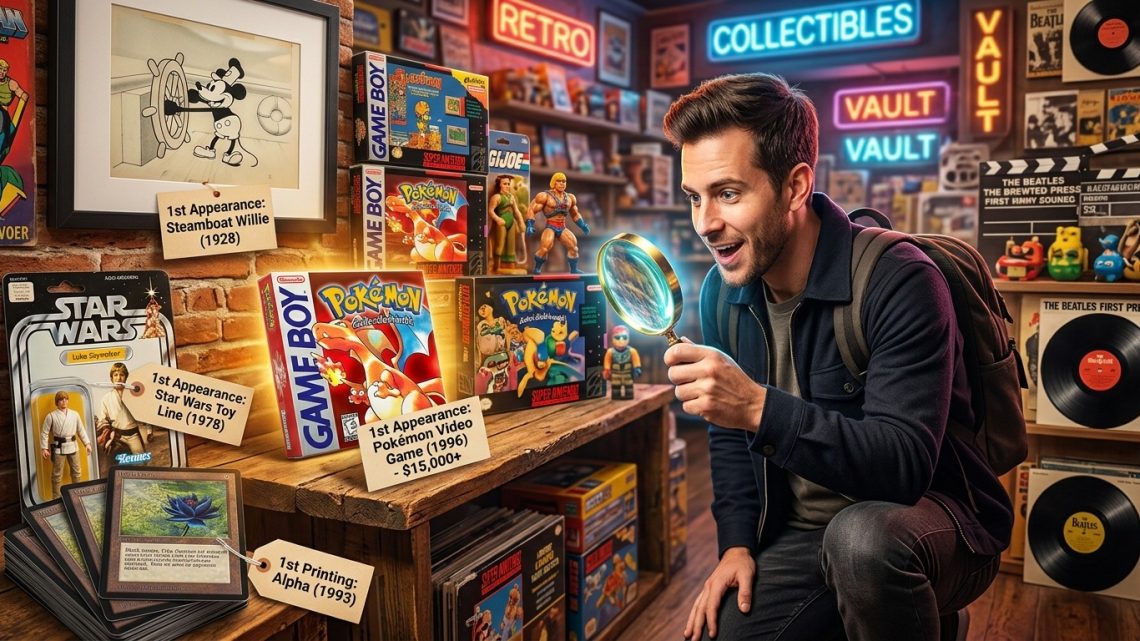
Why Collectors Are Now Hunting First Appearances Outside of Comics
There is a moment every serious collector knows. You are flipping through a box, and something clicks. The cover looks right. The issue number looks right. You pull it out, check the story title, and feel that specific quiet rush of recognizing a first appearance before the price reflects it. That feeling started in comics. It is not staying there.
The Hunt in Brief
- The first appearance mindset has spread from comics to animation, games, and streaming as major IPs dominate all formats
- Non-comic first appearances, including animated debuts and game tie-in material, have genuine collector markets behind them
- Franchise IP research before official merchandise drops is where the sharpest collectors are focusing right now
- Licensed tie-ins like art books and promo comics can carry first appearance status for characters in major releases
- Historical cross-media firsts show that format does not limit collectible value when a character becomes culturally significant
The Logic Behind Chasing a Character’s Very First Moment
The key issue chase is not nostalgia. It is logic. A character who becomes culturally significant will always have a first moment, one appearance that predates everything else. The collector who holds that moment owns something that cannot be reprinted away. It is the original instance. Everything after it is a derivative.
Comics built this understanding over decades. The market for first appearances has been formalised through third-party grading census records that make it possible to verify scarcity, condition, and the exact book a character stepped into. That infrastructure gave collectors confidence. Prices followed. The mindset took hold.
What changed is that the characters driving those prices are no longer exclusively comic-book creations. Harley Quinn was born in animation. Ahsoka Tano arrived in a television film. Characters from games have crossed into comics, then into film, then into collectible lines with their own secondary markets. The starting point of a character’s existence has become a more complicated question than it once was, and collectors are mapping it with real seriousness.
How Modern Franchises Created New Hunting Grounds
Once a franchise spreads across multiple formats, the traditional definition of a first appearance starts to fracture. A character might appear in an animated short, then a licensed comic, then a game tie-in, before the main series even begins. Each of those moments is a potential first. And collectors have started cataloguing all of them with the same precision they once reserved for bronze age back issues.
The formats that matter most to cross-media hunters right now fall into recognizable categories:
- Animated series and specials, which have produced legitimate first appearances with real market history behind them
- Licensed tie-in comics attached to games, films, or streaming properties, which occasionally introduce characters before their main-media debut
- Art books and companion publications that feature new characters in their design phase, sometimes before those characters appear anywhere else in any format
- Collectible lines where a figure or card can precede a character’s screen appearance if licensing moves faster than production schedules allow
- Promotional material and convention exclusives, which have carried genuine first appearances for secondary characters on more than one notable occasion
Each of these has precedents worth studying. The Harley Quinn situation is the most cited. Her debut in the Batman: The Animated Series episode from 1992 predates her comic book appearance by over a year. Collectors who held early VHS releases or original production cels had something the comic market took years to fully acknowledge. Those items now command serious premiums, and the lesson they taught the collector community was lasting.
GTA 6 and the Race to Map a Franchise Before It Arrives
This is where the collector research game gets genuinely interesting. When a franchise operates at the scale of Grand Theft Auto, the arrival of new characters triggers immediate questions across the collector community. Where do these characters appear first? Are there licensed tie-ins planned? Has any art book or companion publication been announced? Will there be a prequel comic, a promotional release, anything at all that predates the main game and places a character in print for the first time?
Collectors researching GTA 6 characters have already started asking those exact questions. The franchise is large enough that licensed merchandise, tie-in publications, and promotional material will almost certainly appear before and alongside the main release. Any of those could carry a character’s first printed appearance. The collector who identifies that moment early is in a position that becomes very difficult to replicate once the character is established and the broader market catches up to what was sitting there quietly at launch.
This is not speculation. It is the same pattern that played out with games that spawned licensed comics, animated series that launched alongside tie-in publications, and streaming properties that released companion art books months before broadcast. The research starts before the release. The value is recognized after. The gap between those two points is where the opportunity lives.
Cross-Media Firsts That Have Actually Held Collector Value
Some cross-media first appearances have built genuine, durable markets. The clearest historical examples follow a pattern that collectors can use as a reference point when assessing a new franchise announcement or character reveal:
- Harley Quinn’s animated debut: Once the character reached cultural saturation, production cels, early VHS releases, and the promotional tie-in comic that introduced her to print all carried premiums reflecting her true origin point rather than her later mainstream recognition.
- Ahsoka Tano’s Clone Wars appearance: Created demand for promotional materials and licensed items tied to that specific series. Her print debut in a tie-in comic now trades well above what its original print run would have suggested was possible.
- Characters from the Mass Effect and Halo game series: Those who crossed into licensed comics generated genuine collector interest in those comics as first print appearances, particularly for characters who became major figures in the expanded fiction and later appeared on screen.
- Tie-in comics for major animated films: These have produced overlooked first appearances for secondary characters who later featured in sequels or spin-off series, often at prices that reflected their original obscurity rather than their eventual cultural weight.
- Limited-run video game art books: These have occasionally introduced characters in full-page design form before the game released, creating a very small window of genuinely scarce first appearances that the mainstream market later recognized and revalued upward.
Reading the Signals Before the Market Does
Knowing where to look is half the discipline. The collectors who consistently find cross-media first appearances before prices adjust are not guessing. They are watching specific signals and acting on them before a character’s cultural footprint has fully formed. That early positioning is what separates a collection built on genuine research from one assembled after the fact at market prices.
Here is what experienced cross-media hunters track consistently:
- Major franchise announcements that reference new or original characters, since those characters will need a first appearance somewhere in tied media before or around the main release
- Licensed publishing deals announced alongside game or film releases, which often indicate planned tie-in comics or companion books where new characters may debut in print for the first time
- Art book announcements from established publishers with a history of producing character design content ahead of release dates, particularly for franchises with a strong visual identity
- Collectible line reveals from manufacturers with a record of producing items tied to pre-release promotional campaigns that introduce supporting characters before the main property lands
- Creator credits and tie-in writer announcements, since knowing who is writing a licensed comic often signals whether it carries genuine narrative weight or functions as a placeholder with limited character development
The signal that matters most is the one closest to a character’s first documented moment. A tie-in comic written and released before the main property launches is far more likely to carry a genuine first appearance than one published as a companion months later. Timing is the variable that separates a notable collectible from a piece of branded merchandise with no lasting significance to the market.
The First Appearance Has Always Been About the Origin Point
What the cross-media expansion of collecting reflects is something that was always true about the key issue mindset. It was never exclusively about comics. It was about the moment a character enters the cultural record for the first time. Comics were simply the medium where most of those moments happened for most of the twentieth century. The format was practical, not sacred.
That is no longer the case. The biggest character introductions of the last decade have arrived from screens of all sizes, from games, from animation, from streaming. A collector who limits their first appearance hunt to print alone is working with a smaller map than the market actually requires, and a smaller map means missed positions on characters who turn out to matter enormously.
The approach that holds up is the one that tracks origin points wherever they occur: in print, in pixels, in the art book that arrives quietly before either. The value of a first appearance has not diminished. The number of places where one can happen has grown considerably, and the collectors moving on that reality earliest are the ones who will look back on this period as obvious in hindsight.