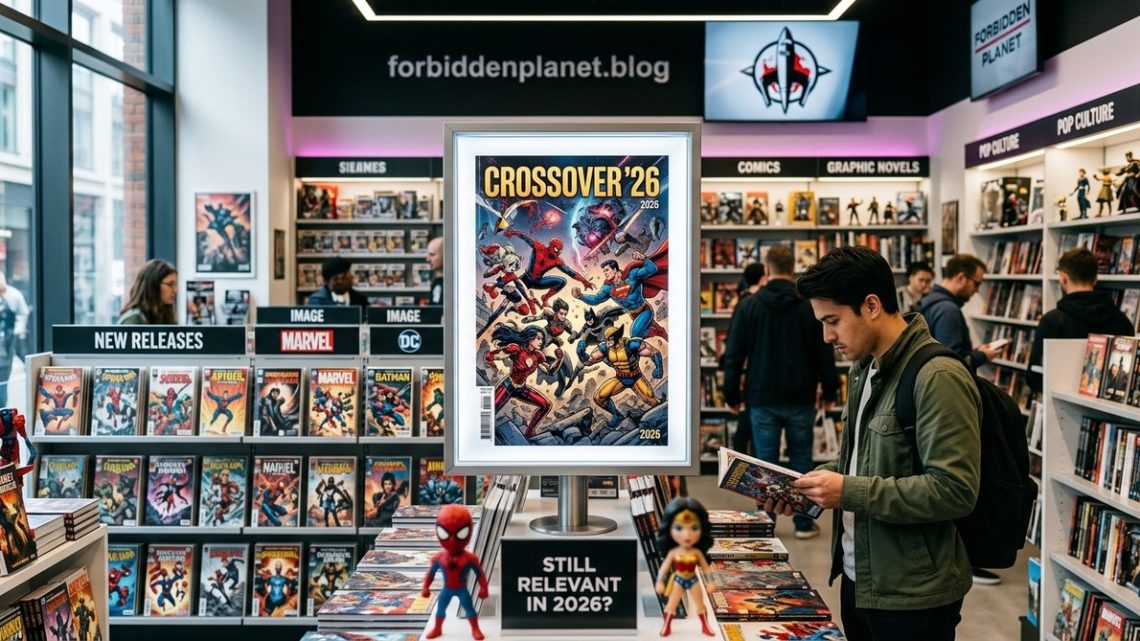
Are Comic Book Crossovers Still Relevant in 2026?
Comic book crossovers used to be the biggest events on the calendar. Readers would line up at shops, trade piles of single issues, and spend months following sprawling narratives across half a dozen titles. But in 2026, the landscape looks different. Digital comics have reshaped how people buy and read. Streaming adaptations pull fans in new directions. And publishers have experimented with everything from weekly miniseries to shared universe events that stretch across entire lines. So the question hangs in the air: are comic book crossovers still relevant in 2026?
The answer is yes, but not in the way you might expect. Crossovers have evolved. They are shorter, more focused, and often designed to work as entry points for new readers. Publishers are listening to feedback about fatigue from oversized events. The result is a year of crossovers that feel intentional rather than compulsory. Let’s break down what is happening, what is working, and what still frustrates fans.
Comic book crossovers remain relevant in 2026 because publishers have adapted to reader expectations. Events are shorter, more self-contained, and better integrated with digital releases. Marvel and DC are focusing on quality over quantity, while indie publishers use crossovers to build bridges between fan communities. For collectors and new readers alike, 2026 offers events that reward investment without punishing those who skip tie-ins.
The State of Major Publisher Crossovers in 2026
Marvel and DC are approaching crossovers differently this year. Marvel has leaned into smaller, character focused events that run for four to six issues. The days of eighteen part epics with forty tie-ins are mostly behind us. DC, meanwhile, is building its crossover strategy around the Absolute Universe and a handful of focused line wide stories.
Both publishers have realized something important: readers trust crossovers that respect their time. When you know a story will wrap up in six months rather than two years, you are more likely to commit. And when tie-in issues are optional rather than required reading, the experience feels fair.
A few standout events define the year so far:
- Marvel’s “Shadows of Tomorrow” — A time hopping X-Men event that runs through five issues with limited tie-ins.
- DC’s “Absolute Universe Crossover” — The first major meeting of characters from DC’s new Absolute line, confirmed at ComicsPRO 2026.
- The Energon Universe Crossover — IDW and Image continue their shared Transformers and G.I. Joe universe with a summer event.
- Archie Comics Reboot Event — Archie Comics kicked off 2026 with a full line reboot that crosses over across all their titles.
Each of these events serves a different purpose. Some are designed to boost readership. Others exist to streamline a publisher’s continuity. A few are simply fun experiments. And that variety is exactly why crossovers still work.
Why Crossovers Still Attract Readers
Crossovers create moments that standalone issues cannot replicate. When Spider-Man teams up with the X-Men, or when the Justice League meets a brand new threat, the energy is unique. Readers feel like they are part of something larger. That shared experience drives discussion on social media, in comic shops, and on forums.
Crossovers also serve as entry points. A new reader who picks up issue one of a crossover event does not need years of backstory. Good crossover writing introduces characters naturally and moves the plot forward without relying on obscure references. In 2026, publishers are getting better at this. They know that every crossover is a chance to welcome someone new.
There is also the collector angle. Crossover events often come with variant covers, lenticular editions, and special printings. For collectors, these are desirable items. The secondary market for key crossover issues remains active, especially when an event introduces a new character or status quo shift. If you are interested in that side of the hobby, our guide on how to spot valuable first issues in 2026 covers what to look for.
Where Crossovers Still Miss the Mark
Not every crossover lands. Some still fall into old traps. The most common complaints from readers in 2026 include:
- Too many tie-ins that feel mandatory — Even with shorter events, some publishers still push tie-ins that barely connect to the main story.
- Delayed shipping schedules — A crossover that takes eight months to publish six issues loses momentum.
- Confusing reading orders — When an event spans multiple series, new readers often do not know where to start.
- High cover prices — With single issues costing more than ever, a full crossover run can strain a budget.
Publishers are addressing these issues, but progress is uneven. Marvel has improved its reading order guides. DC has committed to tighter shipping schedules. Indie publishers like Image and IDW tend to keep crossover events contained to one or two series, which naturally avoids confusion.
If you are new to crossovers and want to avoid frustration, start with events that have a clear reading path. Look for stories that list every issue in order on the inside cover. Avoid events that require you to buy five different series to understand the plot.
How to Approach Comic Book Crossovers in 2026
If you are a comic book enthusiast or a pop culture writer researching the current state of crossover events, here is a practical process for staying informed and getting the most out of each event.
- Identify the core series. Every crossover has a main title or limited series. Start there. Everything else is optional.
- Check the reading order before you buy. Most publishers post official reading orders online. Bookmark them.
- Decide on your format. Trade paperbacks, digital issues, and single issues all have different pros and cons. Choose based on your budget and space.
- Follow the conversation on social media. Reddit and Bluesky have active comic communities that discuss each issue as it drops. Spoiler warnings are common, but the discussion enhances the experience.
- Support your local comic shop when possible. Preordering issues ensures you get copies on release day and helps shops plan their orders.
That last point matters more than you might think. Local comic shops rely on accurate preorder numbers. When readers preorder crossover issues, shops can stock confidently. When everyone waits for the trade, shops lose revenue and sometimes close. If you want to keep physical comic culture alive, preordering is a simple way to help.
Our piece on how to build a comic collection on a budget in 2026 offers more practical tips for managing costs while staying current with events.
Crossover Formats Compared
| Format | Best For | Downside | Average Cost |
|---|---|---|---|
| Single issues | Collectors, early readers | Storage space, high per issue cost | $4.99 – $7.99 each |
| Trade paperback | Budget readers, complete story | Wait time for release | $15.99 – $24.99 |
| Digital single issues | Immediate access, no storage | No physical collectible value | $3.99 – $5.99 each |
| Digital collected edition | Convenience, portability | Same wait as print trade | $11.99 – $19.99 |
| Hardcover collected edition | Display, long term value | Heavier, more expensive | $24.99 – $39.99 |
Your choice depends on your goals. If you are collecting for value, single issues of key crossover moments can appreciate. If you are reading for enjoyment, trades and digital editions offer the best experience per dollar.
What Indie Crossovers Teach the Big Two
Independent publishers have been doing crossovers that feel fresh and accessible. The Energon Universe from Image and IDW is a great example. It connects Transformers and G.I. Joe in a shared universe that started from scratch. No decades of continuity to untangle. No required reading list of fifty issues. Just a clear starting point and a story that builds naturally.
That approach is influencing Marvel and DC. Both publishers have experimented with “clean slate” events that do not require previous knowledge. The Absolute Universe from DC is exactly that. It reimagines classic characters without the weight of decades of history. When those characters cross over later this year, new readers will not feel lost.
“The best crossovers are the ones that assume the reader is smart but not omniscient. You do not need to know every issue from 1985. You just need to know who the characters are and what they want.” — Tom Brevoort, Marvel executive editor, speaking at a 2026 panel.
That quote sums up the shift. Crossovers in 2026 are designed to be welcoming. They respect your intelligence without demanding your entire back issue collection.
The Role of Digital Comics in Crossover Success
Digital comics have changed how crossovers reach readers. Services like Marvel Unlimited and DC Universe Infinite let subscribers read events as part of their membership. That model removes the cost barrier. Instead of spending forty dollars on a six issue event, subscribers pay a monthly fee and read everything included.
This has a direct impact on crossover relevance. More readers mean more conversation. More conversation means more visibility. And more visibility means publishers continue to invest in events.
But digital also creates challenges. Some readers feel that digital releases dilute the urgency of single issues. If you know a crossover will be available on a subscription service in three months, are you as motivated to buy each issue on release day? That tension between digital access and physical sales is one of the biggest debates in comics right now.
For a deeper look at how digital is reshaping the industry, check out our article on the rise of digital comics in 2026: what fans need to know.
What to Watch for in the Rest of 2026
The second half of 2026 has several crossover events already announced or heavily rumored. Here is what is on the radar:
- DC’s “Crisis of the Absolute” — A multiverse spanning event that brings together the main DC line and the Absolute Universe.
- Marvel’s “The Last Annihilation” — A cosmic event centered on the Silver Surfer and the Guardians of the Galaxy.
- Boom! Studios “Power Rangers / TMNT” crossover — A fan favorite pairing returning for a second miniseries.
- Dark Horse “Hellboy Universe” event — A rare crossover between the main Hellboy timeline and the spin off series.
Each of these events will test different aspects of what makes crossovers work. DC’s event will test whether readers embrace a multiverse story without the baggage of past crises. Marvel’s cosmic event will test whether a smaller scale event can generate the same buzz as a line wide blockbuster. The indie crossovers will test whether shared universes built from scratch can challenge the dominance of the big two.
Are Comic Book Crossovers Still Worth Your Time?
They are, but with a caveat. Crossovers in 2026 demand less from you than they did five or ten years ago. You do not need to buy every tie-in. You do not need to read every issue on release day. You can pick the events that interest you, follow them at your own pace, and skip the rest without fear of missing something essential.
That freedom is good for readers and good for the medium. When crossovers feel like obligations, they burn people out. When they feel like invitations, they build community. The best events of 2026 understand that difference.
So whether you are a longtime collector with a long box full of 1990s crossover issues or a newer reader just discovering what a shared universe can do, there is something for you this year. The key is to be selective. Choose events that match your interests. Follow reading orders. And remember that the goal is to enjoy the story, not to complete a checklist.
If you are looking for more recommendations on what to read next, our list of top 10 must-read comics for new fans includes several crossover friendly starting points.
Making Crossovers Part of Your Reading Life
Comic book crossovers in 2026 are smaller, smarter, and more welcoming than they have been in years. Publishers have learned that bigger is not always better. They have learned that readers appreciate a clear beginning, middle, and end. And they have learned that the best crossover is the one that makes you want to talk about it with someone else.
So grab an issue. Preorder a series. Join a discussion online. Visit your local shop. The crossover experience in 2026 is designed for you. All you have to do is show up.